
Caregiving 101: Finding Your Footing as a Caregiver
February 10, 2026
Q&A with Family Consultant Norell Wheeler, MPH / MBH
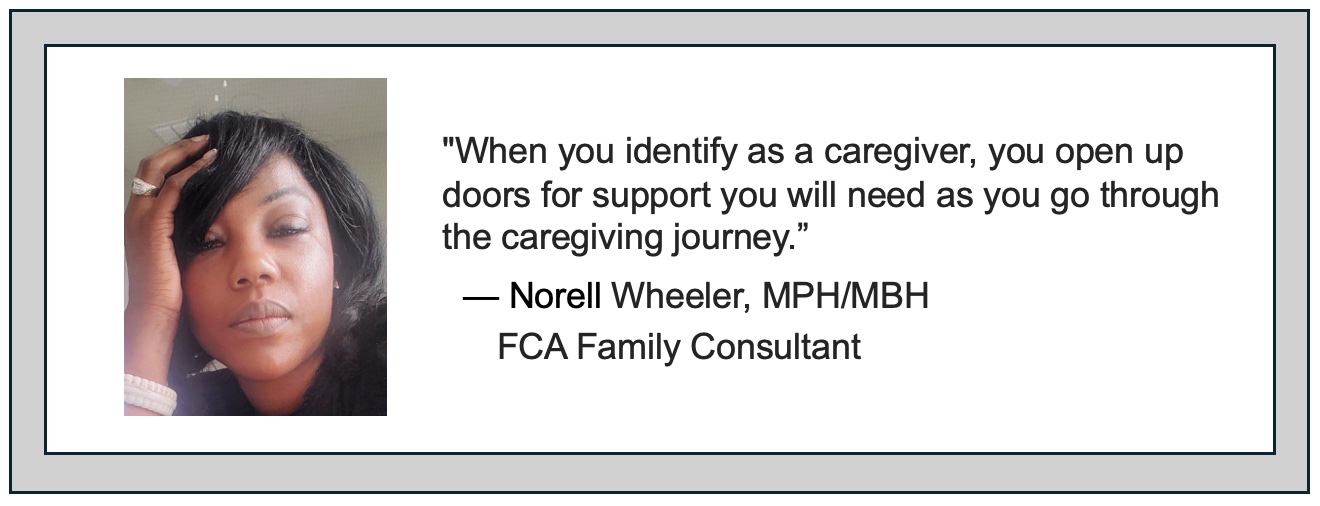
When you care for an aging parent, family member, or friend—especially in the beginning—it’s not uncommon to feel ill-informed, unprepared, and overwhelmed. Many family caregivers find themselves juggling new responsibilities while trying to figure out what they should be doing and where to turn for help.
Caregiving 101 is a free webinar offered annually by FCA Family Consultant Norell Wheeler, MPH / MBH. Participants gain a general overview of what it means to be a caregiver, how caregiving impacts one’s overall health and wellbeing, ways to find help, and more.
We sat down with Norell to discuss the scope of what being a caregiver means; why identifying as a caregiver matters, finding moments of respite, and holding onto joy even in the hardest moments.
Why is it important for someone new to caring for a family member, spouse, or friend to identify as a family caregiver?
Often when people begin the caregiving experience they tend to feel lost. When you identify as a family caregiver, you can get an idea of what resources are out there, what you need as a caregiver and what the care recipient needs. Personally, I was that person. I began caring for my grandmother when I was 9. In my mind, I was a daughter taking care of my dad and that’s what I’m supposed to do. I didn’t know any of the resources that are available.
When you identify as a caregiver, you step out of the weight of ‘this is something I’m supposed to do’ to become a person who is gaining skills and knowledge, and being part of an integrated health and support system. You get to open up doors for support you will need as you go through the caregiving journey.
How does caregiving affect people’s physical and emotional health over time?
Over time, caregiving includes higher rates of mental health issues and chronic stress; more depression and anxiety. Often we see the caregiver’s own physical health diminish. They haven’t gone to the dentist in 6 months to a year, we see lower levels of self-care, and lower income as they cut hours at work. When caregivers are older and care is ongoing, they have an increased risk of dying themselves.
On the positive side, in cases where the caregiver didn’t have a good relationship with the person they’re taking care of, we see higher levels of compassion and empathy, and even improved relationships. They gain skills and learn to advocate. It’s empowering. There’s a sense of making a contribution that can bring meaning and resolve decades-old family discord.
What are some common barriers caregivers face when trying to ask for or accept help?
It’s twofold. Many care recipients don’t trust support from people coming into the home, which presents a challenge for the caregiver wanting help. On the other hand, caregivers may think, “No one can do as good a job.” Or, they’re too busy and engulfed that they forget to ask for help.
If help is offered, they may think, “What am I going to do if I get the help?” Without the stress, they feel like they don’t have a purpose. Even more so when caregiving ends; they don’t know what to do. That’s why we talk to them about grief support early on. The person you’re caregiving may not be the person who you knew, and there’s early grief associated with that.
What counts as respite? Does it always mean formal care?
Respite doesn’t always have to be hiring home care providers or adult day programs. The main goal is to prevent burnout, slow it down, or reduce it. I explain respite as self-care; something you can do for yourself for 5 or 10 minutes a day to breathe and pause. Even just sitting in the bathroom for 10 minutes in the quiet or listening to music, whatever self-care means to you—that’s also respite. Those little nuggets of time lower burnout.
Walk for 10 minutes. Meditations are proven to lower caregiver burnout. Sit outside, close your eyes and listen to what’s coming in, draw in your senses to step away from responsibilities.
Respite is a requirement in caregiving, paid or unpaid. You can’t be a caregiver without self-care.
If a caregiver could take just one thing away from Caregiving 101, what would you want it to be?
To remember that caregiving is impactful to your health physically, mentally, and emotionally. It does take a toll over time. It’s important that you remember how those stressors affect you; how they show up, so you can get help to address it.
Are you starting to feel angry over things that normally don’t bother you? No matter what the care recipient’s diagnosis is, they’re going to sense and feel it too. How’s your sleep? Are you having headaches for the first time? Losing or gaining weight? Socially more withdrawn? Notice these so you can address those needs with professionals.
Is there something you wish every caregiver heard earlier in their journey?
To have fun caregiving. Enjoy it! As hard as it is, laugh at the things your loved ones say and do and hold onto positive memories.
Forget trying to be perfect as a caregiver. You’re not always going to do things right, you will make mistakes. That’s all part of being a caregiver. Find your peace and resonate in it. Whatever is going to happen is going to happen, and we are as prepared as we are. Be humane about things and slow down.
Enjoy being with your loved one. And if you really can’t find joy with your caregiving, find someone else to provide that care. Because the care recipient deserves care that’s adequate, respectful, and empathetic.